World’s Greatest Inventions – The Internet by Tim Berners-Lee
Summary Introduction
The invention of the Internet, conceptualized by Tim Berners-Lee in the late 20th century, has fundamentally transformed the way we communicate, access information, and conduct business. Often hailed as one of the most significant technological advancements in human history, the Internet has created a global village, connecting billions of people and facilitating the exchange of ideas and resources like never before. This article delves into the intricacies of the Internet, its inventor, the historical context of its creation, and its profound impact on society.
Detailed Description
The Internet is a vast network of interconnected computers that communicate using standardized protocols. At its core, it allows for the transmission of data across various devices, enabling users to access information, share content, and connect with others worldwide. Berners-Lee’s key innovation was the development of the World Wide Web (WWW), which introduced the concept of hyperlinks, allowing users to navigate between different web pages seamlessly.
The Internet operates on a client-server model, where client devices (like computers and smartphones) request information from servers that host websites and services. This architecture enables the rapid exchange of data and supports a wide range of applications, from email and social media to e-commerce and online education. The Internet’s scalability and flexibility have made it an essential tool for modern life, influencing nearly every aspect of society.
Historical Context
In the late 1980s and early 1990s, the world was on the cusp of a technological revolution. The Cold War had ended, leading to a period of increased collaboration and innovation. The rise of personal computers and advancements in telecommunications set the stage for the development of the Internet. However, communication methods were still limited, and the idea of a global network was largely theoretical.
The social landscape was also evolving, with a growing emphasis on information sharing and collaboration. The scientific community was eager to find ways to connect researchers and share knowledge more effectively. Amidst this backdrop, Berners-Lee’s vision for a decentralized, user-friendly network emerged as a solution to the challenges of information access and communication.
The Inventor’s Story
Tim Berners-Lee was born on June 8, 1955, in London, England. He grew up in a family of mathematicians and computer scientists, which fostered his early interest in technology. Berners-Lee studied physics at the University of Oxford, where he developed a strong foundation in computing and programming.
After graduating, he worked at CERN, the European Organization for Nuclear Research, where he recognized the need for a system to facilitate information sharing among researchers. His experiences at CERN, coupled with his passion for technology, drove him to develop the World Wide Web. Berners-Lee faced numerous challenges, including skepticism from colleagues and the need to convince organizations to adopt his vision. However, his determination and innovative spirit led to the successful launch of the first website in 1991.
The Invention Process
The development of the Internet and the World Wide Web was a collaborative effort that spanned several years. Berners-Lee began his work in 1989, proposing a system that would allow researchers to share information easily. He developed the first web browser and web server, laying the groundwork for the modern Internet.
Key breakthroughs included the creation of HTML (Hypertext Markup Language), which allowed for the formatting of web pages, and the establishment of URLs (Uniform Resource Locators), which provided a standardized way to access resources on the web. Despite facing initial resistance, Berners-Lee’s persistence and collaboration with other researchers ultimately led to the widespread adoption of the Internet.
Global Impact
The introduction of the Internet has had an immediate and transformative impact on society. It has revolutionized communication, enabling people to connect instantly across the globe. The Internet has also transformed industries, including media, education, and commerce, creating new opportunities and challenges.
In the long term, the Internet has played a crucial role in advancing globalization, facilitating the exchange of ideas and resources across borders. It has empowered individuals, allowing them to access information and participate in discussions that shape public discourse. The Internet’s influence extends to social movements, political activism, and cultural exchange, making it an essential tool for modern life.
Today, the legacy of the Internet continues to evolve, with advancements in technology such as mobile connectivity, cloud computing, and artificial intelligence further shaping its impact on society. The Internet has become an integral part of daily life, influencing how we communicate, learn, and conduct business.
Conclusion with Ian Khan’s Perspective
The Internet embodies the spirit of innovation and the power of human creativity. Tim Berners-Lee’s journey from a visionary idea to a global phenomenon serves as a powerful reminder of the impact that technology can have on society. As we navigate the complexities of the digital age, the lessons learned from the development of the Internet resonate deeply, urging us to embrace collaboration and exploration in our quest for a better future.
About Ian Khan
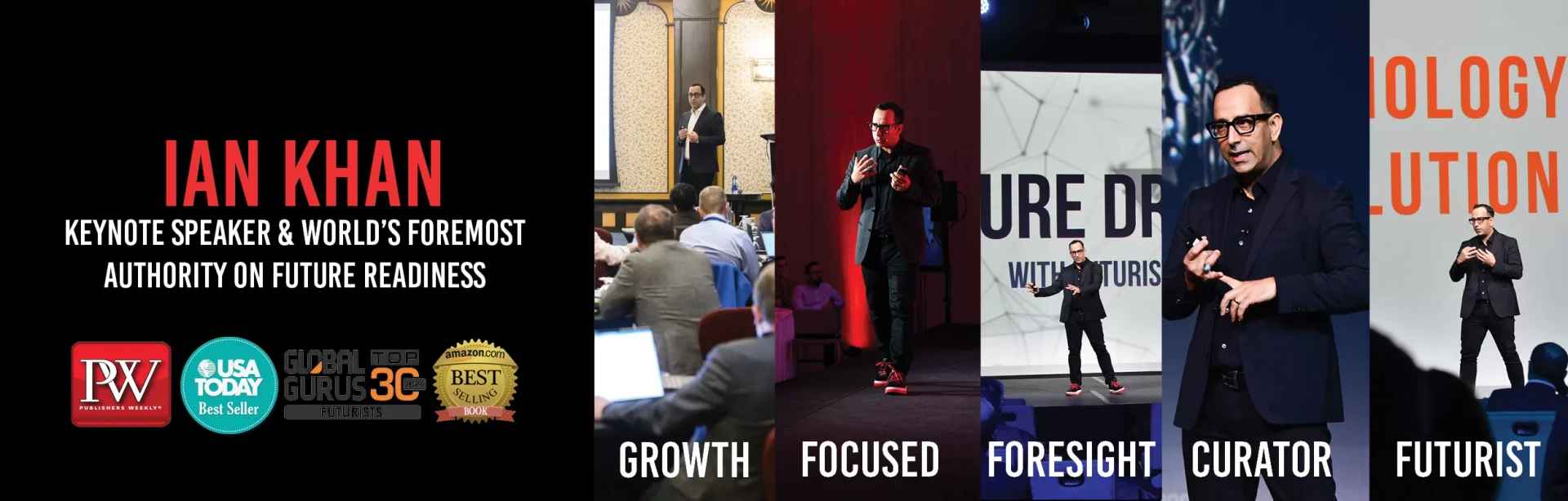
Ian Khan is a globally recognized Futurist, Technology Keynote Speaker, and AI Expert helping organizations navigate digital transformation. A CNN contributor and author of multiple bestselling books, Ian has delivered keynotes at Fortune 500 companies worldwide. His insights on emerging technologies, AI ethics, and the future of business have made him a trusted voice for leaders preparing for tomorrow.
Call to Action
Ready to bring transformative insights to your next event? Book Ian Khan as your keynote speaker: https://iankhan.com/contact