The Future of Long-Haul Trucking: A 20-50 Year Outlook
*Meta Description: Explore the autonomous, electric, and hyper-connected future of long-haul trucking. A 20-50 year forecast on supply chains, jobs, and the road ahead.*
Introduction
For decades, the image of the long-haul trucker has been an indelible symbol of commerce, independence, and the open road. This sector is the literal lifeblood of global supply chains, moving over 70% of all freight in the United States alone. Yet, this foundational industry stands on the precipice of its most profound transformation since the invention of the diesel engine. A convergence of technological, economic, and societal forces is set to redefine everything from the vehicles themselves to the very concept of a driver. This long-term outlook projects the future of long-haul trucking over the next half-century, offering a strategic roadmap for logistics companies, policymakers, and the workforce to navigate the coming seismic shift. The journey to 2070 is not just about automated vehicles; it is about the complete re-architecting of global logistics.
Current State & Emerging Signals
The present-day trucking industry is a complex ecosystem grappling with a persistent driver shortage, razor-thin profit margins, and increasing pressure to improve safety and reduce its environmental footprint. The average age of a long-haul driver in the US is now mid-40s, with significant challenges in attracting younger talent. Concurrently, the technological seeds of the future are being sown. We are witnessing the rapid maturation of key enabling technologies: Level 4 autonomous driving systems from companies like Waymo Via and Aurora are being tested on public roads; Tesla, Nikola, and Daimler Truck are deploying Class 8 electric semi-trucks; and the rollout of 5G networks is beginning to provide the low-latency connectivity required for vehicle-to-everything (V2X) communication. These are not science fiction experiments but tangible signals pointing toward an inevitable automated and electrified future.
2030s Forecast: The Dawn of Autonomy and the Hybrid Fleet (10-15 Years)
The 2030s will be characterized by the phased integration of autonomous trucks into a predominantly human-driven system. We will witness the rise of the “hybrid fleet.”
Geofenced autonomy will become commercially operational on designated long-haul corridors, often referred to as “autonomous lanes” on major interstates like I-10 and I-80. Trucks will operate autonomously on these long, monotonous highway stretches under continuous remote monitoring. The initial business model will be “transfer hubs,” where human drivers handle the complex first and last miles through urban environments, then hand over the trailer to an autonomous truck for the thousand-mile highway leg. This hybrid approach immediately addresses the driver shortage on the least desirable routes.
Electrification will see massive growth, spurred by falling battery costs, government incentives, and corporate sustainability mandates. By 2035, we forecast that over 30% of new Class 8 truck sales in North America and Europe will be electric, primarily for regional and drayage routes where range is less of an issue.
The role of the human driver will begin its evolution into that of a “transportation manager” or “remote operations specialist.” Their value will shift from physical driving to managing a fleet of autonomous assets, handling exceptions, and overseeing loading/unloading logistics. The demand for traditional driving skills will plateau and begin to decline, while demand for tech-savvy logistics and remote operation skills will surge.
2040s Forecast: The Autonomous Majority and Hyper-Connected Logistics (20-30 Years)
By the 2040s, autonomous trucks will become the default option for long-haul freight, representing the majority of new vehicle purchases and a significant portion of the total fleet. The transportation network will become a highly integrated, intelligent system.
The concept of platooning will evolve into “dynamic road trains,” where groups of autonomous trucks from different companies can seamlessly link their braking and acceleration systems via V2V communication, traveling mere feet apart to maximize aerodynamic efficiency and reduce energy consumption by over 15%.
Charging will be revolutionized. Overhead catenary systems, similar to those used by streetcars, will be deployed on key freight arteries, allowing e-trucks to charge while driving. Autonomous docking and inductive wireless charging pads at distribution centers will enable 24/7 operation with near-zero human intervention.
The physical Internet will emerge. Inspired by the digital Internet’s packet-switching principle, standardized modular containers (“packets”) will be autonomously routed through a network of smart hubs (“routers”), optimizing the flow of goods in real-time based on capacity, weather, and demand. This will drastically reduce empty backhauls and inventory carrying costs.
The human role will be almost entirely offboard. The profession of “in-cab long-haul driver” will be nearly extinct, replaced by a smaller number of highly skilled specialists in remote operation centers, AI fleet management, and predictive logistics analytics.
2050+ Forecast: The Post-Highway Era and Physical-Digital Fusion (30-50 Years)
Looking toward 2050 and beyond, the very infrastructure of freight movement may be fundamentally redesigned, moving beyond the paved highway.
Hyperloop and subterranean freight networks represent a potential paradigm shift. Companies like Elon Musk’s Boring Company or Virgin Hyperloop could evolve their passenger concepts to include low-friction, high-speed freight tubes for ultra-priority cargo, moving goods at airline speeds with a fraction of the energy cost. This would create a multi-modal system where the “right tool” is chosen for the job: autonomous trucks for flexible routing, hyperloop for urgent high-value goods.
Fully decentralized, autonomous supply chains will become possible. With the maturation of 3D printing and micro-factories, the need to ship many finished goods over long distances could diminish. Instead, autonomous trucks will primarily transport raw materials and base components to localized production hubs, fundamentally altering global trade patterns.
The truck itself may become a “smart warehouse on wheels.” With AI-driven predictive analytics, goods will be pre-positioned in autonomous mobile distribution centers that circulate in areas of anticipated demand, ready for instant last-mile drone or robot delivery upon order placement. The line between transportation and storage will blur into a continuous flow.
Driving Forces
Several powerful forces are propelling this transformation. Technological advancement in AI, computer vision, and battery chemistry is the primary engine. Economic pressure from the driver shortage, rising fuel costs, and the relentless demand for supply chain efficiency is creating a powerful business case for automation. Regulatory and policy shifts, including stricter emissions standards and the potential reclassification of autonomous vehicles, will either accelerate or hinder progress. Finally, societal expectations for faster delivery, safer roads, and sustainable practices are pushing the industry toward a cleaner, more efficient model.
Implications for Leaders
Leaders in logistics, manufacturing, and retail must act now to ensure future readiness. The strategic imperative is to view autonomy not as a simple vehicle replacement but as a complete system transformation. Investing in data architecture and IoT sensors today is critical to future integration with autonomous, AI-driven networks. Workforce transformation programs must be launched immediately to reskill drivers for high-tech roles in remote operations and data analysis. Furthermore, strategic partnerships with tech startups, energy companies for charging infrastructure, and even competitors to establish standards will be more valuable than going it alone. Finally, scenario planning for various regulatory outcomes and infrastructure developments is essential for resilient long-term strategy.
Risks & Opportunities
The road ahead is fraught with risk but also paved with immense opportunity.
Key risks include severe job displacement for current drivers without adequate transition plans, creating social and political friction. Cybersecurity becomes a paramount concern, as a hacked autonomous fleet could cripple a national economy. The creation of a new digital divide between companies and nations that can afford this tech and those that cannot is also a significant threat. Furthermore, the ethical programming of AI for split-second decisions in accident scenarios remains an unresolved challenge.
The opportunities, however, are transformative. The potential to reduce the over 4,000 annual fatalities involving large trucks in the US alone is a monumental human benefit. The efficiency gains could drastically reduce the cost of goods and logistics, which account for a significant portion of product costs. The environmental opportunity through electrification and efficiency could make the freight sector a leader in decarbonization. Finally, the creation of entirely new industries around remote operations, predictive logistics, and mobility infrastructure represents a vast new frontier for innovation and investment.
Scenarios
Optimistic Scenario (The Seamless Transition): Technology matures smoothly, regulations are proactive and harmonized, and public acceptance is high. A robust public-private partnership funds reskilling programs, turning displaced drivers into well-paid remote operators and technicians. Global supply chains become hyper-efficient, resilient, and green, boosting economic growth and sustainability simultaneously.
Pragmatic Scenario (The Bumpy Road): Adoption is uneven and slower than anticipated. Technological hurdles and regulatory battles cause delays. Certain regions and companies surge ahead, creating a fragmented and competitive landscape. Social unrest over job losses leads to protective legislation that slows automation in some areas. Progress happens, but it is messy, contested, and geographically inconsistent.
Challenging Scenario (The System Failure): A major cybersecurity breach or a series of high-profile autonomous truck accidents erodes public and regulatory trust, leading to a moratorium on the technology. A lack of investment in grid and charging infrastructure strangles the transition to electric vehicles. The industry remains stuck with outdated, inefficient, and dirty technology, exacerbating the driver shortage and causing recurring supply chain crises.
Conclusion
The long-haul truck of 2070 will bear little resemblance to today’s vehicle. It will likely be autonomous, electric, and a deeply integrated node in a vast, intelligent logistics network. The industry will have transformed from a people-centric operation to a technology-and-data-centric system. For leaders, the time for preparation is now. The decisions made in the next decade regarding technology investment, workforce strategy, and regulatory engagement will determine whether their organizations thrive in this new era or are left behind. The future of long-haul trucking is not a distant speculation; it is a reality being built today through innovation and strategic foresight. Achieving future readiness is the most critical delivery on the horizon.
—
About Ian Khan
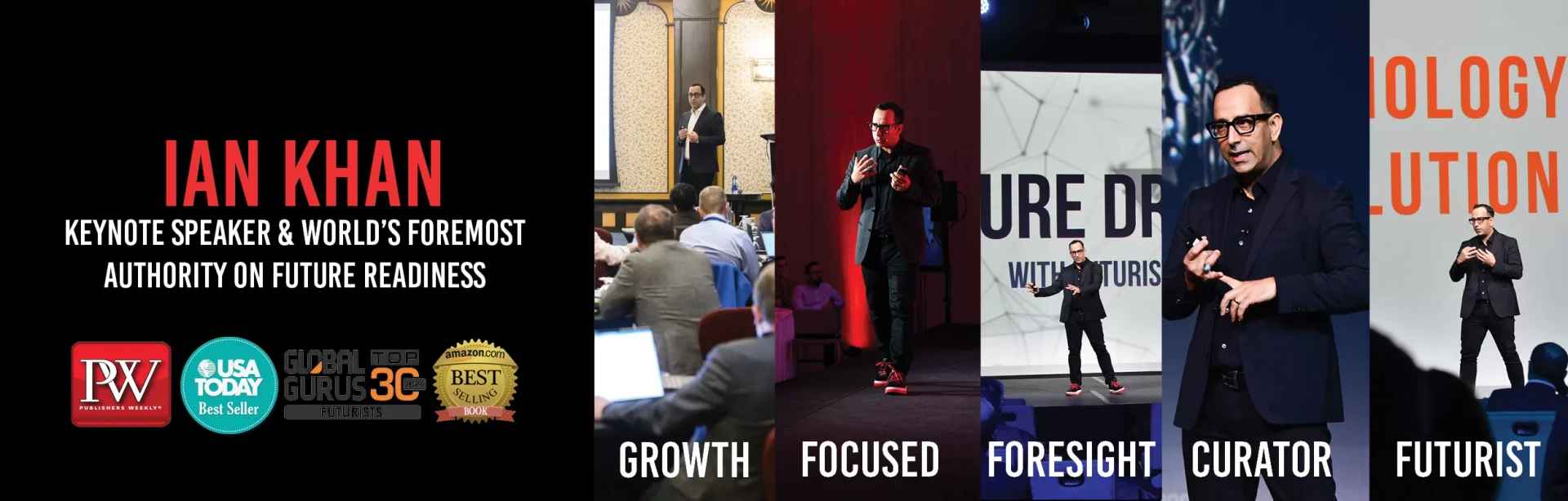
Ian Khan is a globally recognized futurist and a leading expert on technology adoption and future readiness, honored on the Thinkers50 Radar list of the top 30 management thinkers most likely to shape the future of business. He is the creator of the acclaimed Amazon Prime series “The Futurist,” which explores the impact of emerging technologies on society, and the author of multiple books that provide actionable insights into the next decade of transformation.
Specializing in long-term strategic foresight, Ian possesses a unique ability to distill complex technological trends into clear, strategic implications for businesses and governments. His Future Readiness framework has helped countless organizations worldwide move from reactive planning to proactive strategy, building resilience and identifying opportunity in the face of rapid change. With a track record of accurate forecasts and a focus on the 10-50 year horizon, Ian provides not just predictions, but a structured pathway for leaders to navigate the future with confidence.
To future-proof your organization, Ian Khan is available for transformative keynote speeches that inspire teams, deep-dive Future Readiness strategic planning workshops, multi-decade scenario planning consulting, and ongoing executive foresight advisory services. Contact us today to begin preparing your leadership and your strategy for the next 20-50 years.