The Future of Education: 2030-2050 Strategic Outlook – 2025 Edition
Navigating Three Decades of Learning Transformation That Will Redefine Knowledge, Skills, and Human Development
We stand at the threshold of the most profound education transformation since the invention of the printing press. The convergence of artificial intelligence, immersive technologies, quantum computing, and neuroscience is creating an education revolution that will fundamentally reshape how we learn, teach, and develop human potential. As a futurist who has tracked education innovation across technology companies, academic institutions, and learning organizations worldwide, I can state with certainty: the education system of 2050 will bear little resemblance to today’s classroom-centric, standardized model. It will be personalized, immersive, lifelong, and adaptive—a system where learning is tailored to individual needs rather than standardized curricula, and where education continues throughout life rather than ending with formal schooling.
This comprehensive 20-50 year forecast examines the evolution of education across three distinct eras: the 2030s (AI and Personalized Learning Era), the 2040s (Quantum and Immersive Learning Era), and the 2050s (Lifelong and Predictive Learning Era). Each phase represents a fundamental shift in how we approach knowledge acquisition, skill development, and human potential realization.
The 2030s: AI and Personalized Learning Revolution
Key Developments (2030-2039)
The 2030s will witness the mass adoption of artificial intelligence in education and the widespread implementation of personalized learning approaches. This decade represents what I call the “AI and Personalized Learning Phase,” where education becomes increasingly data-driven, customized, and student-centric.
AI-Powered Learning Platforms
By 2035, we project that AI systems will guide 60% of learning experiences, providing personalized curriculum recommendations, adaptive assessments, and customized learning paths with real-time analytics and predictive capabilities.
Personalized Education Pathways
Standardized curricula will give way to customized approaches. By 2032, we estimate that personalized learning will comprise 50% of education, with learning experiences tailored to individual learning styles, interests, and career aspirations.
Digital Learning Ecosystems
Education will become increasingly digital and accessible. By 2038, we project that digital learning platforms will serve 70% of learners, providing remote education, virtual classrooms, and personalized learning management.
Strategic Implications for the 2030s
Education stakeholders must focus on three critical areas during this decade:
1. AI and Learning Data Infrastructure: Build comprehensive AI education platforms that integrate machine learning, student analytics, and personalized engagement. Educational institutions that master data-driven learning will achieve superior student outcomes and engagement.
2. Personalized Learning Capabilities: Develop expertise in adaptive learning, customized curriculum development, and individualized assessment. Organizations that successfully implement personalized learning will lead in student achievement and satisfaction.
3. Digital Education Integration: Create comprehensive digital learning ecosystems that combine virtual classrooms, online resources, and interactive learning tools. Educational providers that build integrated digital systems will control the student learning experience.
The 2040s: Quantum and Immersive Learning
Key Developments (2040-2049)
The 2040s will mark the transition from conventional education approaches to quantum-enhanced learning and fully immersive educational experiences. This “Quantum and Immersive Learning Phase” will see the emergence of technologies that fundamentally transform knowledge acquisition and skill development.
Quantum-Enhanced Learning Research
By 2045, we project that quantum computing will accelerate 70% of education research, simulating complex learning processes, cognitive development, and educational optimization with unprecedented precision.
Immersive Learning Environments
Traditional classrooms will give way to immersive experiences. By 2042, we estimate that immersive learning platforms will serve 60% of students, using virtual reality, augmented reality, and mixed reality to create engaging educational experiences.
Advanced Learning Analytics
Educational assessment will become increasingly sophisticated. By 2048, we project that advanced learning analytics will guide 50% of educational decisions, using AI, neuroscience, and behavioral analytics to optimize learning outcomes.
Strategic Implications for the 2040s
Organizations preparing for this era must focus on:
1. Quantum Computing Integration: Develop expertise in quantum algorithms for education optimization, learning research, and cognitive development analysis. Educational institutions that master quantum computing will achieve unprecedented research capabilities.
2> Immersive Learning Infrastructure: Build capabilities in virtual reality, augmented reality, and mixed reality education. Companies that create effective immersive learning systems will lead in student engagement and knowledge retention.
3> Advanced Analytics Development: Establish expertise in learning analytics, cognitive science, and educational optimization. Organizations that master advanced learning analytics will achieve superior educational outcomes and efficiency.
2050 and Beyond: Lifelong and Predictive Learning
Key Developments (2050+)
Post-2050, we enter what I call the “Lifelong and Predictive Learning Era,” where education becomes continuous throughout life, completely personalized, and predictive of learning needs.
Lifelong Learning Systems
By 2055, we project that lifelong learning approaches will dominate 80% of education, with continuous skill development, career adaptation, and knowledge updating becoming standard practice.
Predictive Learning Networks
Education will become predominantly anticipatory. By 2060, we estimate that predictive learning systems will manage 70% of education, using AI and quantum analytics to anticipate learning needs before they arise.
Integrated Learning Ecosystems
Advanced technologies may enable new education paradigms. While still speculative, by the late 2050s we may see the emergence of integrated learning ecosystems that seamlessly connect education, career development, and personal growth.
Strategic Implications for 2050+
Organizations looking toward this horizon must consider:
1> Lifelong Learning Frameworks: Develop comprehensive approaches to continuous education, skill adaptation, and career development across extended human lifespans.
2> Predictive Learning Infrastructure: Create systems for learning need prediction, educational intervention, and skill development optimization using advanced AI and quantum computing.
3> Integrated Learning Development: Prepare for education scenarios involving seamless learning integration, automated educational services, and comprehensive personal development management.
Cross-Cutting Themes Across All Timeframes
Technology Evolution
Throughout all three phases, education technologies will advance through distinct stages:
- 2030s: AI learning platforms, personalized education, digital learning
- 2040s: Quantum learning research, immersive education, advanced learning analytics
- 2050+: Lifelong learning systems, predictive education, integrated learning ecosystems
Economic Transformation
The education economy will undergo fundamental restructuring:
- 2030s: AI education services, personalized learning, digital education platforms
- 2040s: Quantum education research, immersive learning, advanced educational analytics
- 2050+: Lifelong learning services, predictive education, integrated learning systems
Social and Ethical Considerations
Society will grapple with profound education questions:
- 2030s: Data privacy, algorithmic bias, educational access, learning equity
- 2040s: Immersive learning ethics, quantum security, educational enhancement, cognitive development
- 2050+: Lifelong learning ethics, predictive education governance, integrated learning regulation
Education Sector Scenarios
K-12 Education
2030s: AI-assisted schools, personalized K-12 learning, digital classroom integration
2040s: Quantum-enhanced schools, immersive K-12 education, advanced learning assessment
2050+: Lifelong K-12 systems, predictive childhood education, integrated youth development
Higher Education
2030s: AI universities, personalized higher education, digital campus platforms
2040s: Quantum-enhanced universities, immersive higher education, advanced academic analytics
2050+: Lifelong higher education, predictive university systems, integrated academic development
Professional and Corporate Education
2030s: AI professional training, personalized corporate learning, digital skill development
2040s: Quantum-enhanced professional education, immersive corporate training, advanced workforce analytics
2050+: Lifelong professional development, predictive career education, integrated workforce learning
Risk Assessment and Mitigation Strategies
High-Probability Risks
- Educational Inequality: Widening gaps between those with access to advanced learning technologies and those without
- Data Privacy Concerns: Vulnerabilities in increasingly data-dependent and connected education systems
- Ethical Challenges: Questions about AI decision-making, immersive learning, and educational enhancement
- Workforce Transformation: Role evolution and skill requirements for education professionals
Mitigation Strategies
- Inclusive Education Innovation: Develop technologies and policies that ensure broad access to educational advances
- Robust Data Protection: Implement comprehensive security and privacy frameworks for education data systems
- Educational Ethics Framework Development: Establish clear guidelines for emerging educational technologies and interventions
- Education Workforce Transition: Create comprehensive retraining and role evolution programs for education professionals
Conclusion: The Future Readiness Imperative
The education transformation unfolding across the next three decades represents both unprecedented opportunity and profound challenge. The organizations that thrive will be those that embrace what I call “Future Readiness”—the capability to anticipate change, adapt quickly, and transform uncertainty into advantage.
The strategic implications are clear and urgent:
Immediate Action (2025-2030): Build AI education capabilities, develop personalized learning expertise, and establish digital education infrastructure. Educational organizations that delay until technologies mature will find themselves permanently behind.
Medium-Term Preparation (2030-2040): Develop quantum computing capabilities, invest in immersive learning research, and create advanced learning analytics systems.
Long-Term Vision (2040-2050+): Establish lifelong learning frameworks, prepare for predictive education scenarios, and contribute to integrated learning ecosystem development.
The future belongs to the prepared. The question is not whether education transformation will reshape your organization, but whether your organization will help shape that transformation or be shaped by it. The time to build your Future Readiness framework is now.
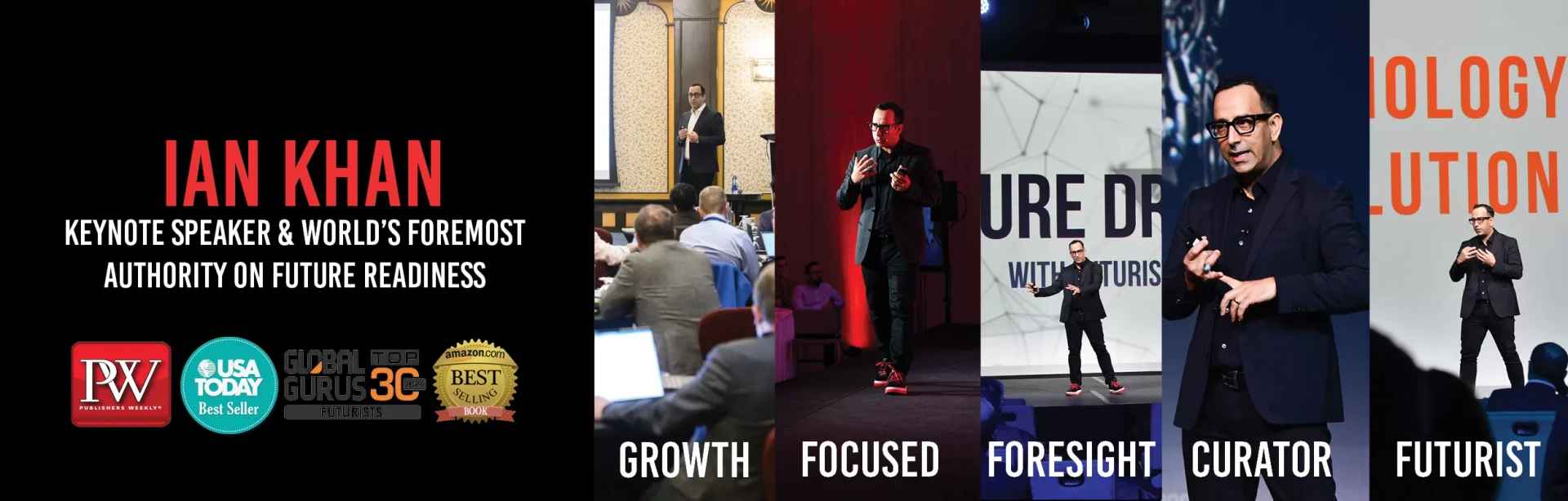
About Ian Khan
Ian Khan is a globally recognized futurist, CNN featured technology expert, and bestselling author dedicated to helping organizations achieve Future Readiness in an age of exponential technological change. As the creator of the Amazon Prime series “The Futurist” and a recipient of the prestigious Thinkers50 Radar Award, Ian has established himself as one of the world’s leading voices on education transformation and emerging technologies.
His groundbreaking research through the Ian Khan Future Readiness Institute provides educational organizations with the strategic frameworks needed to navigate the learning revolution successfully. With over 15 years of experience advising educational institutions, technology companies, and learning organizations, Ian combines deep technological expertise with practical education industry knowledge.
If your organization needs to develop comprehensive education strategies, build Future Readiness capabilities, or navigate the complex landscape of learning transformation, contact Ian Khan today for keynote speaking opportunities, strategic consulting, Future Readiness workshops, and customized sessions designed to transform education uncertainty into competitive advantage.