








The Future of Commercial Aviation: A 20-50 Year Outlook
Meta Description: Explore the future of commercial aviation through 2050+. Discover AI-piloted planes, supersonic travel, zero-emission aircraft, and strategic implications for airline leaders.
Introduction
Commercial aviation stands at the precipice of its most profound transformation since the advent of the jet engine. For decades, the fundamental experience of air travel—boarding a tube with wings, powered by fossil fuels, and flown by human pilots—has remained remarkably consistent. This stability is about to be shattered by a convergence of technological, environmental, and societal forces. The coming half-century will redefine not just how we fly, but why we fly, who flies, and what it means to be an airline. This long-term outlook, projecting from the 2030s to the 2050s and beyond, charts the course of this radical evolution. For airline executives, aerospace manufacturers, airport authorities, and policymakers, understanding these multi-decade horizons is not an academic exercise; it is the foundational work of Future Readiness™ that will separate the industry leaders from the casualties of disruption.
Current State & Emerging Signals
Today’s commercial aviation industry is a study in contrasts. It is a marvel of global logistics, having recovered from the pandemic to carry over 4.5 billion passengers annually, yet it remains notoriously fragile, plagued by thin profit margins and vulnerability to economic shocks. The environmental footprint is massive, contributing an estimated 2-3% of global CO2 emissions, sparking a growing “flight shame” movement. The technological backbone, while advanced, is incremental: more fuel-efficient twin-engine wide-bodies, incremental improvements in air traffic management, and in-flight connectivity.
The signals of change, however, are unmistakable. Electric Vertical Takeoff and Landing (eVTOL) aircraft are moving from concept to test flights, with companies like Joby Aviation and Archer leading the charge. Sustainable Aviation Fuel (SAF) production is scaling, albeit slowly. NASA and Boeing are investing in transonic truss-braced wing designs that promise radical efficiency gains. Artificial intelligence is already optimizing routes and fuel consumption. Crucially, public and regulatory pressure for decarbonization is mounting, with the International Air Transport Association (IATA) committing to net-zero carbon emissions by 2050. These are the nascent tremors that foretell the earthquake to come.
2030s Forecast: The Decade of Hybridization and Automation
The 2030s will be defined by the pragmatic integration of new technologies into the existing aviation ecosystem. This is the decade of transition, where the old and new will coexist, often uneasily.
The most visible change will be the normalization of Advanced Air Mobility (AAM). eVTOL air taxis will become operational in major global cities like Dubai, Singapore, and Los Angeles, offering short-hop urban and suburban routes. Initially, these will be piloted and serve premium markets, but they will prove the viability of electric propulsion for commercial use. For regional travel, hybrid-electric aircraft, such as those envisioned by Heart Aerospace, will begin servicing routes under 500 miles. These planes will use electric power for takeoff and landing—the most fuel-intensive phases—switching to traditional or SAF-blended fuels for cruise.
In the cockpit, the role of the human pilot will begin its long evolution. AI co-pilots will become standard, handling optimal flight paths, managing systems, and even landing planes in low-visibility conditions with superior precision. Single-pilot operation for cargo flights will be approved by regulatory bodies, a crucial stepping stone towards fully autonomous flight. This will not be about eliminating pilots but augmenting their capabilities, transforming them into highly skilled system managers.
Passenger experience will see a biometric revolution. End-to-end facial recognition will enable seamless, ticketless travel from curb to gate. Cabins will become more adaptive, with smart surfaces that personalize lighting, entertainment, and climate control. However, the fundamental tube-and-wing configuration for long-haul travel will persist.
2040s Forecast: The Age of Autonomy and Sustainability
By the 2040s, the incremental changes of the 2030s will coalesce into a new paradigm. The industry will shed many of its 20th-century constraints.
The breakthrough achievement of this decade will be the certification and deployment of the first generation of long-range, hydrogen-electric and fully electric aircraft. Companies like Airbus, with their ZEROe concept, are paving the way. These aircraft will primarily serve medium-haul markets, operating with near-zero emissions and significantly reduced noise pollution. This will enable the expansion of airports closer to city centers and the creation of new flight paths previously restricted due to noise.
Autonomy will mature. Fully autonomous, pilotless cargo aircraft will be commonplace, revolutionizing overnight logistics and freight. In passenger aviation, the first autonomous regional aircraft will enter service on highly controlled routes, overseen by a single pilot-monitor who manages multiple flights simultaneously from a ground control center. Public acceptance will be the final hurdle, overcome through demonstrably superior safety records compared to human pilots.
Supersonic travel will make a triumphant, sustainable return. Unlike the Concorde, next-generation supersonic aircraft from firms like Boom Supersonic will run on carbon-neutral SAF and utilize “boomless” cruise technology to overcome sonic boom restrictions, making overland supersonic flight a reality. This will re-establish the premium, time-sensitive market for international business travel.
2050+ Forecast: The Morphology of Flight
Post-2050, commercial aviation will become almost unrecognizable. We will move beyond incremental improvements to fundamental morphological changes in aircraft design and purpose.
The concept of a “plane” will diversify. We will see the widespread adoption of Blended Wing Body (BWB) aircraft. These flying wings, with bodies seamlessly integrated into a single lifting surface, offer enormous gains in aerodynamic efficiency and interior space. Cabins will be reconfigured into social hubs, lounges, and conference rooms, transforming long-haul travel from a passive experience into a productive or luxurious journey.
The line between urban transit and regional aviation will blur completely. A vast, integrated network of eVTOLs, autonomous flying taxis, and hyperloop-style ground transport will connect megacity hubs. Travel between cities 300 miles apart could become as seamless as taking a subway across town today.
The most speculative yet plausible development is the integration of materials science and biotechnology. Self-healing smart skins on aircraft could detect and repair micro-fractures. Bio-inspired morphing wings that change shape like a bird’s for optimal performance throughout a flight could become standard. We may even see the first experimental aircraft powered by compact nuclear fusion reactors, finally decoupling long-distance travel from fuel mass constraints and enabling truly global range.
Driving Forces
Several powerful forces are propelling this transformation:
- Technological Innovation: Battery energy density, hydrogen storage, and artificial intelligence advancements
- Climate Change Imperative: Regulatory and corporate push for decarbonization
- Demographic and Economic Shifts: Rise of global middle class in Asia and Africa creating massive new demand
- Changing Consumer Expectations: Demand for seamlessness, personalization, and sustainability
Implications for Leaders
The strategic implications for today’s leaders are vast and require immediate action:
- Airline CEOs: Must pivot from managing fleets to managing mobility ecosystems, forming partnerships with eVTOL, hyperloop, and AV ground transport companies
- Investment Strategy: SAF production and offtake agreements are no longer optional but a core strategic imperative
- Chief Technology Officers: Must establish dedicated AI and autonomy divisions today to build expertise for managing future systems
- Aerospace Manufacturers: R&D focus must shift from incremental engine efficiency to radical airframe redesign and propulsion system disruption
- Airport Operators: Need to begin master planning for vertiports, hydrogen refueling infrastructure, and redesigned terminals for seamless biometric processing
Risks & Opportunities
Risks:
- Trillions in infrastructure investment required for energy transition
- Cybersecurity becoming a matter of life and death in autonomous systems
- Societal inequity if advanced air mobility becomes a luxury for the wealthy
- Geopolitical tensions disrupting global collaboration for air traffic management
- Public backlash against autonomous passenger flight delaying adoption
Opportunities:
- Pioneering zero-emission travel capturing brand premium and regulatory advantage
- New markets opening in regional and urban air mobility creating new revenue streams
- Radical efficiency gains from new designs and autonomy creating sustainable profitability
- Industry transforming from climate villain to green transition leader
Scenarios
- Optimistic Scenario (The Great Integration): By 2050, a seamless, multi-modal global mobility network exists. Autonomous, zero-emission aircraft whisk passengers silently between cities and within megaregions. Air travel is safer, cheaper, more accessible, and has a net-positive environmental impact through advanced carbon capture. Global standards and cooperation prevail.
- Realistic Scenario (The Bifurcated Skies): The transition is uneven. Wealthy nations and corridors (e.g., North America, Europe, East Asia) enjoy the benefits of advanced, sustainable aviation. Developing regions lag behind, relying on older, cheaper, and less efficient technology, creating a two-tiered global system. Autonomous cargo is widespread, but passenger flight still relies on pilot-monitors due to public skepticism.
- Challenging Scenario (The Stalled Ascent): Economic downturns, geopolitical conflicts, and technological setbacks slow progress dramatically. SAF adoption is too slow to meet climate targets. Public fear and regulatory inertia halt the move toward autonomy. The industry remains trapped in an outdated paradigm, struggling with high costs, environmental penalties, and stagnant demand.
Conclusion
The future of commercial aviation is not a distant destination but a path being laid down today. The decisions made by current leaders—on R&D investment, partnerships, infrastructure, and sustainability—will determine which future scenario unfolds. The journey from 2030 to 2050 will be one of the most complex transformations any industry has ever undertaken, requiring immense capital, unprecedented collaboration, and visionary leadership. The long-term outlook is clear: the era of the carbon-intensive, human-piloted, tube-and-wing aircraft is ending. In its place will rise a diverse, intelligent, and sustainable ecosystem of flight. For those who embrace Future Readiness™ and begin strategic foresight planning now, the next 50 years offer not a threat, but the greatest opportunity in the history of human mobility.
—
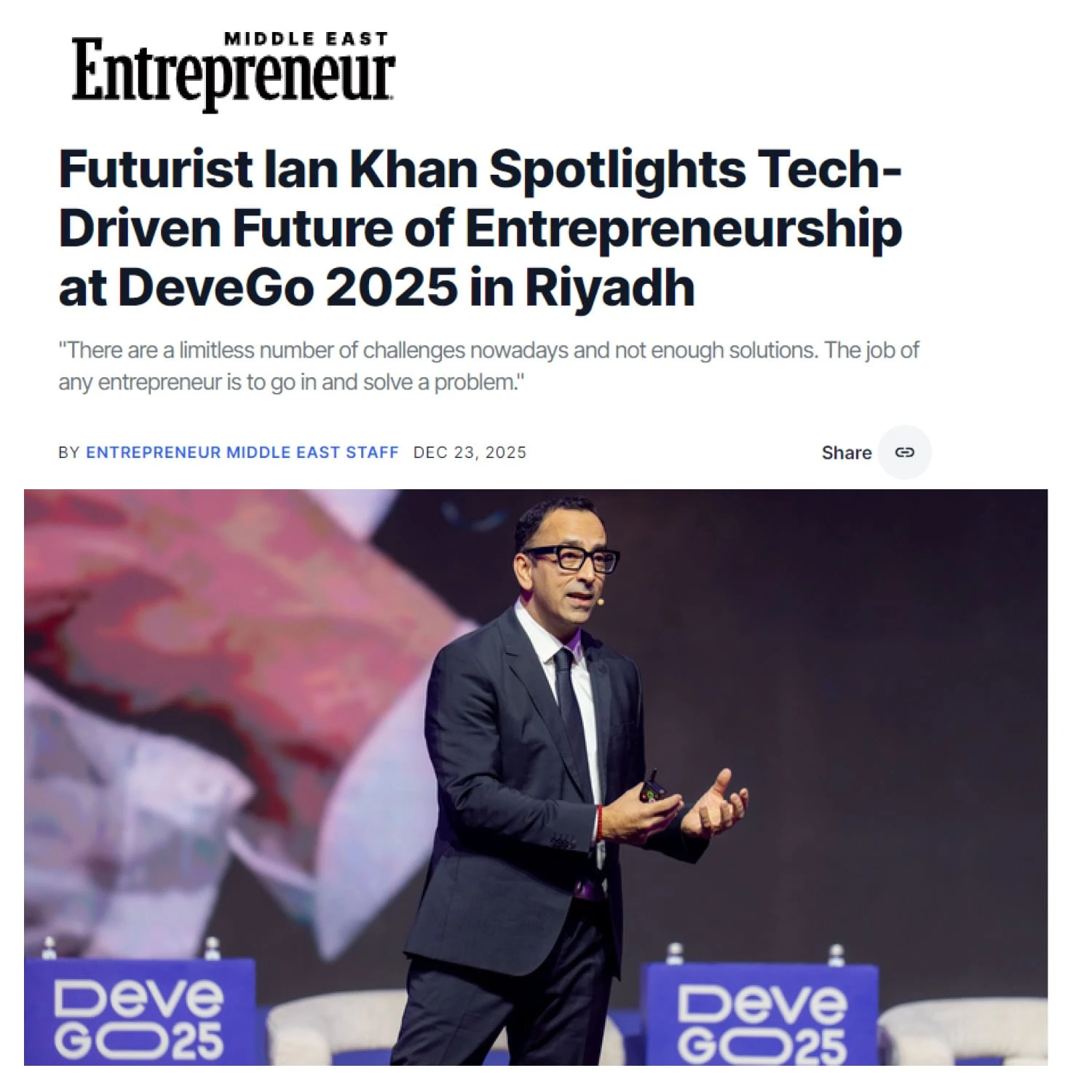
About Ian Khan
Ian Khan is a world-renowned futurist and a leading expert in long-term strategic foresight, dedicated to empowering organizations to navigate the complexities of the next 20-50 years. His acclaimed work has earned him a place among the Top 25 Globally Ranked Futurists and recognition as a Thinkers50 Radar Award honoree, highlighting the most influential management thinkers poised to shape the future of business. As the creator of the Amazon Prime series “The Futurist,” Ian brings compelling insights about technology and transformation to a global audience, demystifying complex trends and making them accessible and actionable.
Ian specializes in the discipline of Future Readiness™, a transformative approach that equips leaders with the frameworks, tools, and mindset needed to anticipate change, mitigate risk, and capitalize on emerging opportunities decades ahead of the competition. His proven track record spans industries worldwide, helping Fortune 500 companies, governments, and startups build resilient, forward-looking strategies that thrive in the face of radical disruption. Ian possesses a unique ability to synthesize technological, economic, and societal signals into clear, strategic narratives, enabling organizations to move beyond short-term reactive planning and become proactive architects of their future.
Is your organization prepared for the transformative shifts of the next half-century? Ian Khan provides the essential guidance to future-proof your strategy. Contact him today for transformative keynote speaking that inspires teams, Future Readiness™ strategic planning workshops to build long-term capacity, multi-decade scenario planning consulting to map your future pathways, and exclusive executive foresight advisory services. Partner with Ian to turn the uncertainty of the future into your greatest strategic advantage.