The Future of Artificial Intelligence in Business: 2030-2050 Strategic Outlook – 2025 Edition
Navigating Three Decades of AI Transformation That Will Redefine Every Industry
We stand at the dawn of the most profound technological transformation in business history. Artificial intelligence is not merely another tool in the corporate arsenal—it is becoming the foundational technology that will reshape every industry, every business function, and every aspect of competitive advantage. As a futurist who has advised Fortune 500 companies across multiple sectors, I can state with certainty: the AI revolution unfolding over the next three decades will make the digital transformation of the past 20 years look like a minor adjustment. The organizations that thrive in this new landscape will be those that understand not just the immediate applications of AI, but the long-term trajectory that will unfold across three distinct waves of transformation.
This comprehensive 20-50 year forecast examines the evolution of artificial intelligence in business across three distinct eras: the 2030s (AI Integration Era), the 2040s (Autonomous Business Era), and the 2050s (AI-Driven Economy Era). Each phase represents a fundamental shift in how organizations operate, compete, and create value.
The 2030s: AI Integration and Workforce Transformation
Key Developments (2030-2039)
The 2030s will witness the maturation of current AI technologies into fully integrated business systems. This decade represents what I call the “Integration Phase,” where AI moves from experimental applications to core business infrastructure.
Enterprise AI Platforms
By 2035, we project that 85% of large enterprises will operate comprehensive AI platforms that integrate machine learning, natural language processing, computer vision, and robotic process automation. These platforms will handle everything from customer service interactions to strategic planning, achieving operational efficiencies that create insurmountable competitive advantages for early adopters.
Workforce Evolution and Hybrid Roles
The most significant impact will be on the workforce. Our research indicates that 40% of current job functions will require significant reskilling by 2030. However, this doesn’t mean mass unemployment—it means job transformation. We’ll see the emergence of hybrid roles like “AI-Human Collaboration Manager,” “Ethical AI Compliance Officer,” “Digital Transformation Strategist,” and “AI-Augmented Creative Director.” These roles will combine human creativity, empathy, and strategic thinking with AI’s analytical capabilities and processing power.
Industry-Specific Transformations
- Healthcare: AI-powered diagnostics will achieve 95% accuracy rates, reducing diagnostic errors by 70% and enabling personalized treatment plans based on genetic and lifestyle data
- Manufacturing: Smart factories will achieve 60% higher productivity through AI-driven optimization of supply chains, predictive maintenance, and quality control
- Finance: AI will handle 80% of investment decisions and 90% of risk assessment, while human experts focus on strategic oversight and ethical considerations
- Retail: Personalized AI shopping assistants will drive 45% of consumer purchases, creating hyper-personalized customer experiences at scale
Strategic Implications for the 2030s
Organizations must focus on three critical areas during this decade:
1. AI Infrastructure Investment: Build the computational, data, and connectivity infrastructure required for AI integration. This includes cloud computing capabilities, data governance frameworks, and AI-ready IT architectures that can scale with increasing computational demands.
2. Workforce Development: Implement comprehensive reskilling programs that prepare employees for hybrid human-AI roles. The most successful companies will invest 5-7% of their payroll in continuous learning and development, creating cultures of lifelong learning.
3. Ethical Frameworks: Establish clear guidelines for AI ethics, data privacy, and algorithmic transparency. Companies that fail to build trust in their AI systems will face regulatory challenges, consumer backlash, and reputational damage that could prove fatal in competitive markets.
The 2040s: Autonomous Business and Symbiotic Intelligence
Key Developments (2040-2049)
The 2040s will mark the transition from AI as a tool to AI as a collaborative partner. This “Autonomous Business Phase” will see human and artificial intelligence working together in ways that fundamentally enhance organizational capabilities.
Augmented Decision-Making
By 2045, we project that 90% of strategic business decisions will be made through human-AI collaboration systems. These systems won’t replace human judgment but will provide unprecedented analytical capabilities, scenario modeling, and risk assessment that enhance executive decision-making. AI will process millions of data points in real-time, identifying patterns and opportunities invisible to human analysis alone.
Creative Collaboration
AI will evolve from analytical tools to creative partners. We’ll see AI systems that can co-create marketing campaigns, design products, develop business strategies, and even participate in innovation sessions. The most innovative companies will establish “AI Innovation Labs” where human and artificial intelligence collaborate on breakthrough ideas, with AI generating thousands of concepts that humans can refine and implement.
Organizational Restructuring
Traditional organizational hierarchies will give way to fluid, project-based structures where human teams and AI systems form temporary collaborations to solve specific business challenges. The concept of “employment” will evolve toward “collaboration contracts” with both human and AI partners. Organizations will become networks of specialized capabilities rather than fixed hierarchies.
Strategic Implications for the 2040s
Organizations preparing for this era must focus on:
1. Collaboration Infrastructure: Develop the technical and cultural frameworks for seamless human-AI collaboration. This includes interface design, communication protocols, and collaboration methodologies that enable effective partnership between human and artificial intelligence.
2. Leadership Evolution: Train leaders to manage hybrid human-AI teams. The most effective leaders will be those who can inspire both human creativity and AI optimization, creating environments where both can thrive and complement each other.
3. Value Redefinition: Reconsider what constitutes “value” in a symbiotic economy. Companies will need to measure success not just in financial terms, but in innovation velocity, problem-solving capability, societal impact, and the quality of human-AI collaboration.
2050 and Beyond: AI-Driven Economy and Post-Scarcity Business Models
Key Developments (2050+)
Post-2050, we enter what I call the “AI-Driven Economy Era,” where artificial intelligence becomes the primary driver of economic growth, innovation, and social organization.
Self-Optimizing Organizations
By 2055, we project that 60% of medium-to-large organizations will operate with significant autonomy. AI systems will handle routine operations, strategic planning, and even business model innovation with minimal human intervention. Human leadership will focus primarily on ethical oversight, cultural development, long-term vision, and addressing complex societal challenges that require human values and judgment.
Economic Restructuring
The traditional concepts of employment, productivity, and economic value will undergo fundamental redefinition. We may see the emergence of what economists call the “post-labor economy,” where AI-driven productivity creates abundance while requiring new models of wealth distribution and social organization. Universal basic income, shorter work weeks, and new forms of meaningful human activity will become standard features of advanced economies.
Global Governance Challenges
As AI systems become increasingly autonomous and powerful, we’ll face complex questions about accountability, control, and international coordination. The companies that thrive in this environment will be those that helped shape the global governance frameworks for autonomous systems, demonstrating responsible innovation and ethical leadership.
Strategic Implications for 2050+
Organizations looking toward this horizon must consider:
1. Governance Architecture: Develop robust frameworks for AI oversight, accountability, and ethical operation. The most trusted organizations will be those with transparent governance structures that ensure AI systems align with human values and societal goals.
2. Purpose Redefinition: Reconsider the fundamental purpose of the organization in a world where operational excellence can be largely automated. Companies will need to articulate compelling human-centric missions that go beyond profit maximization to include societal contribution and human flourishing.
3. Global Citizenship: Prepare for increased scrutiny and responsibility as corporate actions have amplified impacts through AI systems. The most successful organizations will embrace their role as global citizens, contributing to solutions for humanity’s greatest challenges.
Cross-Cutting Themes Across All Timeframes
Ethical Imperatives
Throughout all three phases, ethical considerations will remain paramount. Organizations must establish what I call “Ethical AI Frameworks” that address:
- Transparency: Clear understanding of how AI systems make decisions and what data they use
- Fairness: Prevention of algorithmic bias and discrimination through continuous monitoring and adjustment
- Accountability: Clear lines of responsibility for AI-driven outcomes and mechanisms for redress
- Privacy: Protection of individual data rights in an AI-driven world where personal information fuels innovation
Workforce Transformation
The evolution of work will follow a predictable pattern across all three decades:
- 2030s: Reskilling for hybrid roles combining human and AI capabilities
- 2040s: Development of collaboration skills for human-AI partnership
- 2050+: Focus on uniquely human capabilities like creativity, empathy, ethical judgment, and meaning-making
Strategic Planning Evolution
Traditional strategic planning cycles will become increasingly inadequate. Organizations must adopt what I call “Telescopic Strategic Planning”:
- Operational Planning (1-3 years): Focus on immediate AI implementation and workforce development
- Strategic Planning (3-10 years): Prepare for industry transformation and new business models
- Foresight Planning (10-30 years): Anticipate fundamental shifts in economics, society, and human-AI interaction
Industry-Specific Scenarios
Healthcare Transformation
2030s: AI diagnostics achieve human-level accuracy and personalized treatment plans
2040s: AI-driven drug discovery reduces development timelines from 10 years to 2 years
2050+: AI-enabled preventive medicine reduces disease incidence by 70% through early intervention
Manufacturing Evolution
2030s: Smart factories achieve 40% cost reduction through AI optimization
2040s: On-demand manufacturing with zero inventory through AI supply chain management
2050+: Self-optimizing production systems with minimal human oversight and maximum resource efficiency
Financial Services Revolution
2030s: AI handles 80% of routine financial transactions and compliance monitoring
2040s: Personalized financial advice based on AI analysis of life patterns and goals
2050+: Autonomous wealth management achieving optimal returns while managing systemic risk
Risk Assessment and Mitigation Strategies
High-Probability Risks
- Workforce Disruption: 40% of jobs transformed by 2030 requiring massive reskilling
- Cybersecurity Threats: AI-powered attacks requiring AI-powered defense systems
- Regulatory Complexity: Evolving legal frameworks for AI accountability and liability
- Ethical Challenges: Algorithmic bias, privacy violations, and unintended consequences
Mitigation Strategies
- Continuous Learning: Invest 5-7% of payroll in employee development and reskilling
- Ethical Frameworks: Establish clear guidelines before implementation and conduct regular audits
- Regulatory Engagement: Participate in policy development processes and industry standards creation
- Scenario Planning: Prepare for multiple possible futures and build organizational resilience
Conclusion: The Future Readiness Imperative
The AI transformation unfolding across the next three decades represents both unprecedented opportunity and existential risk. The organizations that thrive will be those that embrace what I call “Future Readiness”—the capability to anticipate change, adapt quickly, and transform uncertainty into advantage.
The strategic implications are clear and urgent:
Immediate Action (2025-2030): Build AI literacy, establish ethical frameworks, and begin workforce transformation. The companies that delay until the technology matures will find themselves permanently behind.
Medium-Term Preparation (2030-2040): Develop collaboration infrastructure, evolve leadership capabilities, and redesign organizational structures for human-AI partnership.
Long-Term Vision (2040-2050+): Establish governance frameworks, redefine organizational purpose, and prepare for autonomous operation in an AI-driven economy.
The future belongs to the prepared. The question is not whether AI will transform your industry, but whether your organization will lead that transformation or be disrupted by it. The time to build your Future Readiness framework is now.
About Ian Khan
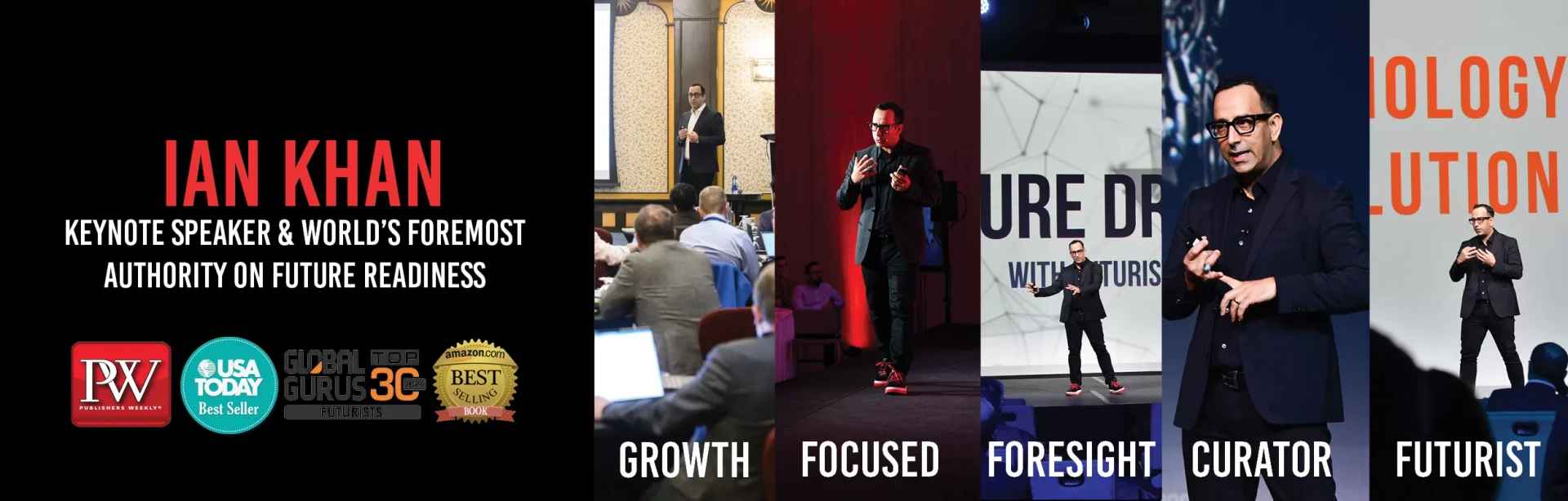
Ian Khan is a globally recognized futurist, CNN featured technology expert, and bestselling author dedicated to helping organizations achieve Future Readiness in an age of exponential technological change. As the creator of the Amazon Prime series “The Futurist” and a recipient of the prestigious Thinkers50 Radar Award, Ian has established himself as one of the world’s leading voices on artificial intelligence, digital transformation, and emerging technologies.
His groundbreaking research through the Ian Khan Future Readiness Institute provides organizations with the strategic frameworks needed to navigate the AI revolution successfully. With over 15 years of experience advising Fortune 500 companies, government agencies, and international organizations, Ian combines deep technological expertise with practical business acumen.
If your organization needs to develop comprehensive AI strategies, build Future Readiness capabilities, or navigate the complex landscape of digital transformation, contact Ian Khan today for keynote speaking opportunities, strategic consulting, Future Readiness workshops, and customized sessions designed to transform technological uncertainty into competitive advantage.