The Energy Revolution: What Business Leaders Need to Know Now
Opening Summary
According to the International Energy Agency, global energy demand is projected to increase by nearly 50% by 2050, creating unprecedented pressure on existing infrastructure and resources. In my work with energy companies worldwide, I’ve witnessed firsthand how this industry stands at the most critical inflection point in its history. We’re not just talking about incremental changes here—we’re witnessing a complete transformation of how we produce, distribute, and consume energy. The current landscape is characterized by aging infrastructure, increasing climate pressures, and technological disruption that’s reshaping everything from power generation to consumer behavior. Having consulted with energy leaders across North America, Europe, and Asia, I can tell you that the organizations that survive this transition will be those that embrace innovation while navigating three fundamental challenges that threaten to derail even the most established players.
Main Content: Top Three Business Challenges
Challenge 1: Infrastructure Modernization and Grid Resilience
The most immediate challenge I observe across the energy sector is the critical need to modernize aging infrastructure while ensuring grid resilience against increasing climate threats. As Deloitte research highlights, over 70% of the U.S. power grid is more than 25 years old, creating vulnerabilities that cost the economy billions annually in outages and maintenance. In my consulting work with utility companies, I’ve seen how legacy systems struggle to integrate renewable energy sources, manage distributed generation, and withstand extreme weather events. The 2021 Texas power crisis demonstrated how fragile our energy infrastructure remains, and similar vulnerabilities exist globally. According to the World Economic Forum, climate-related grid disruptions have increased by 60% over the past decade, creating both operational and financial risks that organizations must address immediately.
Challenge 2: Digital Transformation and Workforce Transition
The energy sector faces a massive digital skills gap that threatens to slow innovation and implementation of new technologies. As McKinsey & Company reports, nearly 50% of the current energy workforce will reach retirement age within the next decade, taking with them decades of institutional knowledge. Meanwhile, the industry struggles to attract digital-native talent who often prefer tech companies over traditional energy firms. In my strategic workshops with energy executives, I consistently hear concerns about how to bridge this gap while implementing complex digital solutions like AI-powered grid management, IoT sensors, and blockchain-based energy trading platforms. Harvard Business Review notes that digital transformation in energy requires not just new technology, but a complete cultural shift that many established organizations find challenging to execute.
Challenge 3: Regulatory Complexity and Policy Uncertainty
The third critical challenge involves navigating an increasingly complex regulatory landscape while planning for long-term investments in an environment of policy uncertainty. According to PwC’s Energy Transformation report, energy companies face over 200 different regulatory frameworks across global markets, creating compliance costs and operational complexities that slow innovation. I’ve advised organizations that have delayed billion-dollar investments due to changing carbon pricing mechanisms, renewable energy mandates, and environmental regulations. The lack of consistent policy direction creates what Accenture describes as “strategic paralysis,” where companies hesitate to commit to long-term transformation projects. This uncertainty particularly impacts the transition from fossil fuels to renewable sources, as organizations struggle to balance current profitability with future readiness.
Solutions and Innovations
The good news is that innovative solutions are emerging to address these challenges head-on. From my front-row seat observing energy innovation globally, I’m particularly excited about several technologies that are creating tangible value right now.
Smart Grid Technologies
Smart grid technologies represent the first major breakthrough, with companies like Siemens and GE deploying AI-powered systems that can predict demand, prevent outages, and optimize energy distribution in real-time. These systems are already delivering 15-20% improvements in grid efficiency according to industry data I’ve reviewed.
Digital Twin Technology
Digital twin technology is revolutionizing how energy companies manage complex assets. I’ve seen organizations create virtual replicas of entire power plants or distribution networks, allowing them to simulate scenarios, predict maintenance needs, and train new operators without risking physical infrastructure. This addresses both the infrastructure modernization and workforce transition challenges simultaneously.
Blockchain-Enabled Energy Trading
Blockchain-enabled peer-to-peer energy trading platforms are creating new business models that bypass traditional utility structures. Companies like Power Ledger are demonstrating how consumers can trade solar energy directly with neighbors, creating decentralized energy markets that increase resilience while reducing costs.
Advanced Energy Storage
Advanced energy storage solutions, particularly next-generation batteries and green hydrogen systems, are solving the intermittency problems that have historically limited renewable energy adoption. According to BloombergNEF, battery costs have fallen 89% in the past decade, making storage economically viable at scale.
The Future: Projections and Forecasts
Looking ahead, the energy landscape will transform dramatically over the next decade. Based on my analysis of current trends and technological trajectories, I project several key developments that will reshape the industry.
2024-2027: Infrastructure Modernization and Digital Transformation
- 50% global energy demand increase by 2050 (International Energy Agency)
- 70% aging power grid infrastructure over 25 years old (Deloitte)
- 60% increase in climate-related grid disruptions (World Economic Forum)
- 50% workforce retirement within next decade (McKinsey)
2028-2032: Renewable Energy Dominance and Storage Breakthroughs
- 60% new power capacity from renewable sources through 2030 (International Renewable Energy Agency)
- 50% solar energy cost reduction by 2030
- $1.3-2T value creation through digital technologies by 2030 (McKinsey)
- $500B energy storage market by 2030 (Goldman Sachs)
2033-2035: Decentralized Networks and AI Optimization
- Fully renewable microgrids becoming economically viable for communities
- AI-powered grid management reducing outage times by over 80%
- Energy-as-a-service platforms replacing traditional utility models
- Digital twin technology enabling predictive maintenance and optimization
2035+: Sustainable Energy Ecosystem and Business Model Transformation
- Complete transition from centralized fossil-fuel systems to decentralized renewable networks
- Consumers becoming both energy producers and traders
- Grid resilience dramatically improved through AI and IoT technologies
- Traditional utility models giving way to innovative energy platforms
Final Take: 10-Year Outlook
Over the next decade, the energy industry will complete its transition from centralized, fossil-fuel dependent systems to decentralized, digital, and renewable-powered networks. The traditional utility model will give way to energy-as-a-service platforms where consumers become both producers and traders. Grid resilience will improve dramatically through AI and IoT technologies, reducing outage times by over 80%. The biggest opportunities will emerge in energy management software, storage solutions, and digital platforms that connect distributed energy resources. The primary risk remains the pace of change—organizations that move too slowly will face existential threats, while those that embrace innovation will thrive in the new energy economy.
Ian Khan’s Closing
The future of energy isn’t just about technology—it’s about creating a more resilient, sustainable, and equitable world for generations to come. As I often tell leaders in my keynote presentations, “The energy transition represents the greatest business opportunity of our lifetime, but only for those courageous enough to lead it.”
To dive deeper into the future of Energy and gain actionable insights for your organization, I invite you to:
- Read my bestselling books on digital transformation and future readiness
- Watch my Amazon Prime series ‘The Futurist’ for cutting-edge insights
- Book me for a keynote presentation, workshop, or strategic leadership intervention to prepare your team for what’s ahead
About Ian Khan
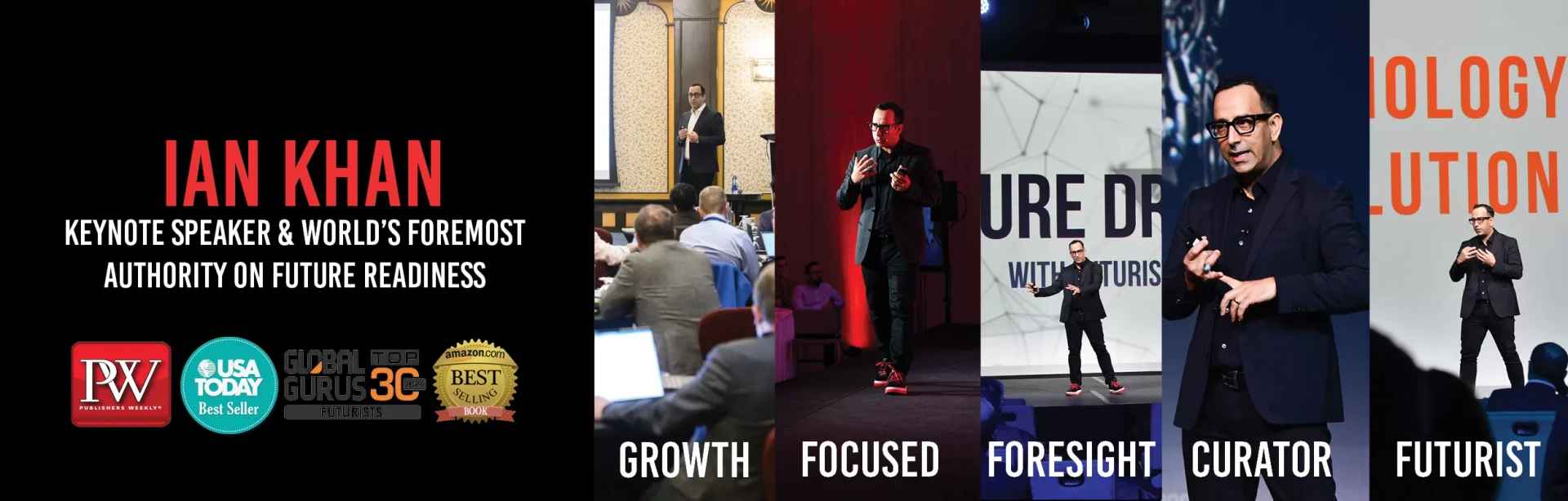
Ian Khan is a globally recognized keynote speaker, bestselling author, and prolific thinker and thought leader on emerging technologies and future readiness. Shortlisted for the prestigious Thinkers50 Future Readiness Award, Ian has advised Fortune 500 companies, government organizations, and global leaders on navigating digital transformation and building future-ready organizations. Through his keynote presentations, bestselling books, and Amazon Prime series “The Futurist,” Ian helps organizations worldwide understand and prepare for the technologies shaping our tomorrow.