Autonomous Vehicles in 2035: My Predictions as a Technology Futurist
Opening Summary
According to McKinsey & Company, the autonomous vehicle market is projected to generate between $300 billion and $400 billion in revenue by 2035. I’ve been tracking this industry’s evolution for over a decade, and what fascinates me most isn’t just the technology itself, but how it’s fundamentally reshaping our relationship with transportation, urban design, and even time itself. In my consulting work with automotive manufacturers and city planners, I’ve witnessed firsthand how autonomous vehicles are transitioning from science fiction to tangible reality. The current landscape shows Level 2 and 3 autonomy becoming increasingly common, with companies like Waymo and Cruise already operating commercial robotaxi services in select cities. But we’re standing at the edge of a much larger transformation—one that will redefine mobility, logistics, and urban infrastructure in ways most businesses haven’t fully comprehended. The journey ahead isn’t just about removing steering wheels; it’s about reimagining entire ecosystems.
Main Content: Top Three Business Challenges
Challenge 1: Regulatory Fragmentation and Safety Standards
The most significant barrier I consistently encounter in my work with transportation companies isn’t technological—it’s regulatory. As noted by the World Economic Forum, autonomous vehicle regulations vary dramatically across countries and even between states, creating a patchwork of compliance requirements that stifles innovation and scalability. I’ve consulted with organizations that have developed brilliant autonomous solutions, only to discover they need completely different implementations for different jurisdictions. The safety certification process alone can take years, and as Harvard Business Review highlights, the lack of universal safety standards creates uncertainty for both manufacturers and consumers. We’re dealing with a fundamental trust gap—how do you prove something is safe when the testing methodologies themselves are still evolving? This regulatory complexity isn’t just slowing deployment; it’s creating massive inefficiencies that drain resources and delay ROI for companies investing billions in autonomous technology.
Challenge 2: Technological Integration and Infrastructure Readiness
In my experience advising Fortune 500 logistics companies, the second major challenge involves the monumental task of integrating autonomous systems with existing infrastructure. Deloitte research shows that only 25% of current road infrastructure is ready to support widespread autonomous vehicle deployment. The vehicles themselves are advancing rapidly, but they don’t operate in isolation—they require smart roads, consistent connectivity, and integrated traffic management systems. I’ve seen brilliant autonomous trucking prototypes fail in real-world scenarios because of inconsistent lane markings or poor weather conditions that existing infrastructure can’t mitigate. Furthermore, as PwC notes in their mobility transformation report, the transition period where autonomous and human-driven vehicles share roads creates complex interaction challenges that current traffic systems weren’t designed to handle. This infrastructure gap represents a massive coordination problem between public and private sectors that will require unprecedented collaboration.
Challenge 3: Business Model Viability and Public Acceptance
The third challenge I consistently observe goes beyond technology and regulation into the realm of economics and psychology. According to Accenture’s mobility research, while 65% of consumers express interest in autonomous vehicles, only 23% would actually ride in one today. This acceptance gap creates significant business model uncertainties. I’ve worked with companies developing autonomous ride-sharing services that struggle to project viable unit economics when public willingness to pay premium prices remains unproven. The insurance landscape presents another massive hurdle—as Forbes reports, the liability framework for autonomous accidents remains largely undefined, creating risk assessment challenges for both manufacturers and operators. We’re dealing with a classic innovation adoption curve problem, but at an unprecedented scale where the stakes include human lives and billions in investment capital.
Solutions and Innovations
The good news is that brilliant minds across the industry are developing innovative solutions to these challenges. From my front-row seat observing technological evolution, I’m particularly excited about several developments:
Simulation-Based Validation Systems
First, we’re seeing the emergence of simulation-based validation systems that can dramatically accelerate safety certification. Companies like NVIDIA are creating digital twin environments where autonomous systems can accumulate millions of virtual miles, addressing both regulatory and safety concerns more efficiently than physical testing alone.
Vehicle-to-Everything (V2X) Communication
Second, vehicle-to-everything (V2X) communication technology is creating the foundation for smarter infrastructure integration. As I’ve seen in pilot cities like Columbus, Ohio, these systems enable autonomous vehicles to communicate with traffic signals, other vehicles, and pedestrian detection systems, creating a coordinated ecosystem rather than isolated smart vehicles.
Modular Business Models
Third, modular business models are emerging that allow for gradual adoption. Companies like Aurora are developing autonomous trucking services that initially focus on highway-only routes, reducing complexity while building operational experience and public trust.
Blockchain-Based Insurance Frameworks
Fourth, blockchain-based insurance and liability frameworks are being tested to create transparent, automated systems for accident investigation and claims processing. This innovation directly addresses the business model uncertainty by creating clearer risk allocation mechanisms.
Public-Private Partnerships
Finally, I’m observing increased public-private partnerships that coordinate infrastructure upgrades with autonomous deployment timelines. These collaborative approaches recognize that no single entity can solve the infrastructure challenge alone.
The Future: Projections and Forecasts
Based on my analysis of current trajectories and technological readiness, here’s what I project for the coming decade:
2024-2027: Regulatory Framework Development and Infrastructure Preparation
- $300-400B autonomous vehicle market by 2035 (McKinsey)
- 25% current infrastructure readiness for autonomous deployment (Deloitte)
- 65% consumer interest vs 23% actual willingness to ride (Accenture)
- Regulatory fragmentation across countries and states creating compliance complexity
2028-2032: Commercial Deployment and Business Model Validation
- $186.4B global autonomous vehicle market by 2030 (IDC)
- 39.5% CAGR growth between 2022-2030 driving rapid adoption
- $25B annual revenue from autonomous trucking corridors (Goldman Sachs)
- Level 4 autonomy becoming commercially viable for ride-sharing services
2033-2035: Ecosystem Integration and New Business Models
- 15% of new cars sold being fully autonomous (McKinsey)
- Mobility-as-a-service platforms integrating autonomous vehicles with public transit
- Mobile offices, retail spaces, and healthcare clinics transforming vehicle interiors
- Quantum computing applications for route optimization and AI reasoning
2035+: Autonomous Mobility Ecosystem and Urban Transformation
- Autonomous vehicles transitioning from novelty to necessity
- Reimagined logistics networks and supply chain efficiency
- Reclaimed time and reimagined urban space around human experience
- Seamless multi-modal transportation ecosystems
Final Take: 10-Year Outlook
Over the next decade, autonomous vehicles will transition from novelty to necessity, particularly in addressing urban congestion and supply chain efficiency. The transformation will be uneven—geographically and sectorally—with long-haul trucking and metropolitan ride-sharing leading the adoption curve. The opportunities for businesses are massive, from reimagining logistics networks to creating entirely new in-transit experiences for consumers. However, the risks are equally significant, particularly for companies that underestimate the infrastructure and regulatory dependencies. The organizations that thrive will be those that approach autonomy not as a technology implementation challenge, but as an ecosystem transformation opportunity. The winners will be the collaborators, the system thinkers, and those who build flexibility into their autonomous strategies.
Ian Khan’s Closing
The future of autonomous vehicles isn’t just about getting from point A to point B—it’s about reclaiming time, reimagining space, and rebuilding our cities around human experience rather than transportation constraints. In my work with leaders worldwide, I’ve seen that the organizations that thrive in times of transformation are those that look beyond the immediate technological hurdles to the larger societal shifts. Autonomous vehicles represent one of the most significant reallocations of human time and urban space in modern history. The question isn’t whether this future is coming, but whether we’re building the vision, the partnerships, and the adaptive capabilities to shape it positively.
“The most successful organizations won’t just adopt autonomous technology—they’ll help define the ecosystems in which it creates value.”
To dive deeper into the future of autonomous vehicles and gain actionable insights for your organization, I invite you to:
- Read my bestselling books on digital transformation and future readiness
- Watch my Amazon Prime series ‘The Futurist’ for cutting-edge insights
- Book me for a keynote presentation, workshop, or strategic leadership intervention to prepare your team for what’s ahead
About Ian Khan
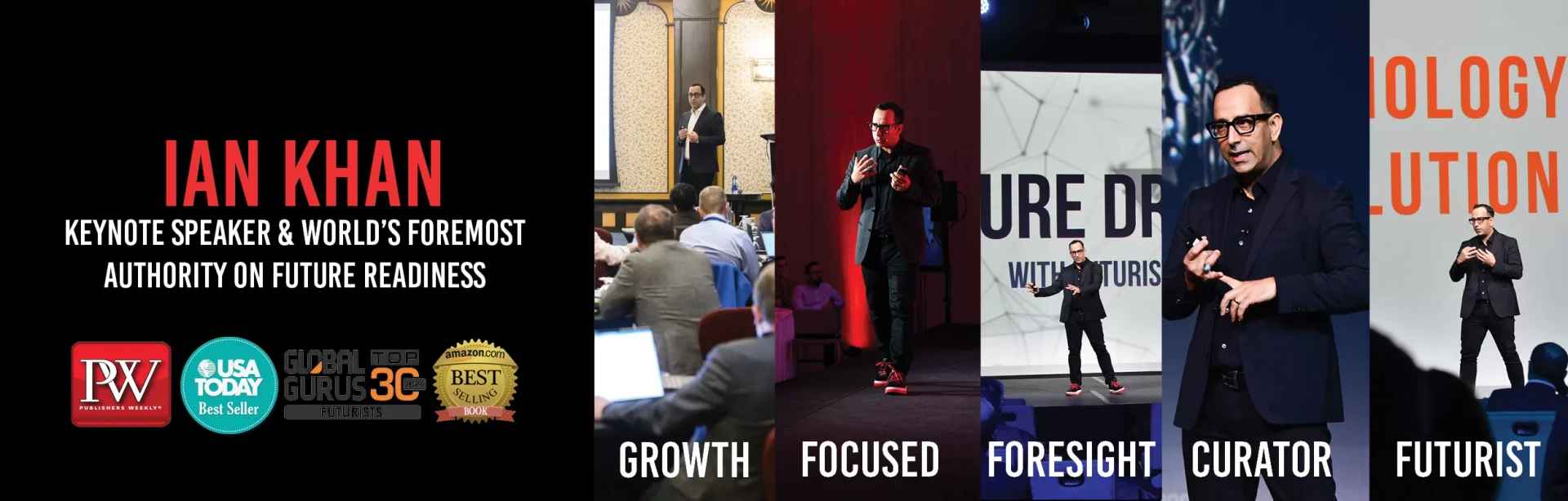
Ian Khan is a globally recognized keynote speaker, bestselling author, and prolific thinker and thought leader on emerging technologies and future readiness. Shortlisted for the prestigious Thinkers50 Future Readiness Award, Ian has advised Fortune 500 companies, government organizations, and global leaders on navigating digital transformation and building future-ready organizations. Through his keynote presentations, bestselling books, and Amazon Prime series “The Futurist,” Ian helps organizations worldwide understand and prepare for the technologies shaping our tomorrow.