10 Ways AI Will Transform Healthcare by 2040
Meta Description: Explore 10 bold predictions for how AI will revolutionize healthcare by 2040, from predictive diagnostics to personalized medicine and beyond.
Introduction
The convergence of artificial intelligence and healthcare is set to create the most significant medical revolution since the discovery of antibiotics. We are on the cusp of a new era where healthcare shifts from being reactive to predictive, from generalized to deeply personalized, and from hospital-centric to distributed and accessible. By 2040, AI will not just be a tool in the clinician’s arsenal; it will be the foundational infrastructure of global health systems. This transformation will redefine the patient-doctor relationship, unlock new frontiers in treatment, and fundamentally alter our understanding of human biology. The journey to this future has already begun, and its implications for patients, providers, and policymakers are profound. Here are 10 ways AI will transform healthcare over the next two decades.
1. Predictive Health Interception
The future of medicine is not about treating disease, but preventing it from ever occurring. By 2040, AI-powered predictive analytics will process an individual’s genomic data, real-time biometrics from wearable sensors, environmental factors, and lifestyle patterns to forecast health risks with startling accuracy. These systems will identify pre-symptomatic disease markers years before clinical symptoms appear, enabling “health interception.” For instance, an AI might alert a 35-year-old that they have an 85% probability of developing a specific cardiac condition by age 50 based on subtle biomarkers and genetic predispositions. This allows for proactive, personalized interventions—from tailored nutrition and exercise plans to preemptive micro-therapies—effectively neutralizing the threat before it manifests. The shift from sick-care to true health-care will be the single greatest achievement of AI in medicine.
2. AI-Driven Drug Discovery and Repurposing
The traditional drug discovery pipeline, which can take over a decade and cost billions, will be radically compressed by AI. By 2040, generative AI models will design novel drug candidates in silico, simulating their interactions with target proteins and predicting efficacy and side effects before a single molecule is synthesized in a lab. These systems will also excel at drug repurposing, finding new therapeutic applications for existing, approved medications at a fraction of the time and cost. We will see AI-designed drugs for complex conditions like Alzheimer’s and various cancers entering clinical trials after just months of development instead of years. This acceleration will not only bring life-saving treatments to patients faster but will also democratize drug discovery, allowing smaller biotech firms and research institutions to compete with pharmaceutical giants.
3. Autonomous Robotic Surgery and Procedures
Surgical robots, currently guided by human surgeons, will evolve into highly autonomous systems capable of performing complex procedures with superhuman precision. By 2040, AI surgeons will analyze pre-operative scans in real-time to create dynamic 3D maps of the surgical field, navigate around critical structures with sub-millimeter accuracy, and adapt to unexpected anatomical variations during an operation. These systems will outperform humans in tasks requiring extreme steadiness and minute-scale manipulation, such as microsurgery and delicate neurosurgical procedures. While a human surgeon will remain in the loop for oversight and complex decision-making, the physical execution will be increasingly delegated to AI. This will lead to dramatically reduced complication rates, shorter recovery times, and the global standardization of surgical excellence, making high-quality procedures accessible even in remote locations via telesurgery networks.
4. Hyper-Personalized Medicine and Treatment Plans
The one-size-fits-all model of medicine will become obsolete. AI will enable hyper-personalized treatment plans that are dynamically tailored to an individual’s unique biology, lifestyle, and even real-time physiological state. By integrating data from genomics, proteomics, gut microbiome, and continuous health monitors, AI systems will not only recommend the right drug but also the right dose, at the right time, for the right person. For a cancer patient, this means a treatment regimen that adapts daily based on tumor marker responses and the patient’s own tolerance. This level of personalization will maximize therapeutic efficacy while minimizing adverse effects, moving us from the era of blockbuster drugs to the era of “N-of-1” therapies, where every patient’s treatment is a unique, data-driven protocol.
5. Decentralized and Ambient Clinical Diagnostics
The centralized hospital lab will no longer be the primary site for diagnostics. By 2040, diagnostic power will be distributed to the point of care and even into our homes. AI will power “lab-on-a-chip” devices and smart toilets that can run hundreds of diagnostic tests from a single drop of blood or urine, detecting everything from infections to early-stage cancers. Furthermore, ambient sensing technology—using radar, acoustic, and visual sensors—will passively monitor our health at home. An AI analyzing your gait, voice patterns, and sleep movements could detect the early signs of Parkinson’s or a potential fall risk long before a clinical visit is scheduled. This creates a continuous, unobtrusive health monitoring system that seamlessly integrates into daily life.
6. The AI Clinical Co-Pilot for Every Practitioner
Every doctor, nurse, and therapist will be assisted by an AI clinical co-pilot. This will be an always-on, voice-activated assistant that has instant access to the latest medical literature, clinical guidelines, and the patient’s entire historical record. During a consultation, the co-pilot will listen to the patient-doctor conversation, suggest relevant questions, highlight potential diagnostic blind spots, and recommend evidence-based treatment options in real-time. It will also handle administrative burdens like clinical note-taking and insurance coding, freeing up the practitioner to focus on human connection and complex clinical reasoning. This augmentation will reduce diagnostic errors, combat physician burnout, and ensure that every patient benefits from the collective knowledge of the global medical community, regardless of their doctor’s individual specialization or experience.
7. Mental Health Monitoring and AI Therapists
The global mental health crisis will be met with a new front line of AI-powered tools. By 2040, passive monitoring via smartphones and wearables will track behavioral biomarkers of mental health—sleep patterns, social interaction frequency, vocal tone, and typing dynamics—to detect early signs of depression, anxiety, or PTSD. For those needing support, always-available AI therapists will provide initial cognitive behavioral therapy (CBT), mindfulness coaching, and crisis intervention. These AI agents, trained on vast datasets of therapeutic interactions, will offer a non-judgmental, 24/7 listening ear and evidence-based coping strategies. They will not replace human therapists but will serve as a scalable first line of defense, triaging care and providing support to millions who currently have no access, thereby de-stigmatizing and democratizing mental healthcare.
8. Global Pathogen Surveillance and Pandemic Prevention
The world will never be caught off-guard by a novel pandemic again. A global, AI-driven biosurveillance network will constantly monitor wastewater, air travel data, and digital health signals across the planet. By analyzing this data in real-time, AI will detect anomalous clusters of symptoms and identify novel pathogens with pandemic potential long before they can spread widely. In the event of an outbreak, these systems will model transmission pathways with extreme accuracy, enabling precisely targeted containment measures that avoid broad economic shutdowns. Furthermore, AI will accelerate the development and distribution of vaccines and therapeutics, tailoring them to the specific genetic sequence of the new threat. This transforms our approach from reactive pandemic response to proactive pandemic prevention.
9. AI-Enhanced Longevity and Aging Reversal
The pursuit of longevity will be supercharged by AI. Research into aging itself—viewed as a malleable biological process—will be accelerated by AI models that can simulate the complex interplay of genetics, cellular damage, and metabolic pathways over a human lifetime. AI will identify novel senolytics (drugs that clear aged, “zombie” cells) and recommend personalized longevity protocols combining specific pharmaceuticals, nutraceuticals, and lifestyle interventions. These regimens will be designed not just to extend lifespan, but to dramatically extend “healthspan”—the period of life spent in good health. By 2040, it will be common for people in their 70s and 80s to have the biological health of someone in their 50s, fundamentally reshaping society’s concept of aging and retirement.
10. The Democratization of Specialist-Level Expertise
The stark inequality in access to specialist medical expertise will be largely erased. AI diagnostic systems, particularly in fields like radiology, dermatology, and ophthalmology, will achieve and surpass human-level performance. A primary care clinic in a rural village, equipped with a smartphone-connected ultrasound probe and a dermatoscope, will be able to access AI that provides a specialist-grade interpretation of images. This “expertise in a box” will democratize high-quality diagnosis, ensuring that a patient’s outcome is not determined by their geographic location or socioeconomic status. It will also allow human specialists in developed nations to focus on the most complex and ambiguous cases, while AI handles the routine screenings and clear-cut diagnoses, creating a more efficient and equitable global healthcare system.
Conclusion
The AI-driven transformation of healthcare by 2040 represents a fundamental paradigm shift from reactive treatment to proactive, personalized, and pervasive well-being. This future is not about replacing human caregivers but about empowering them with tools of unprecedented capability and insight. The relationship between patient and provider will evolve into a collaborative partnership, augmented by intelligent systems that handle data complexity and routine tasks. For healthcare leaders, policymakers, and innovators, the mandate is clear: begin building the data infrastructure, ethical frameworks, and workforce skills today to harness this transformative potential. The goal is a future where high-quality, predictive, and compassionate healthcare is a universal human experience, not a privilege.
About Ian Khan
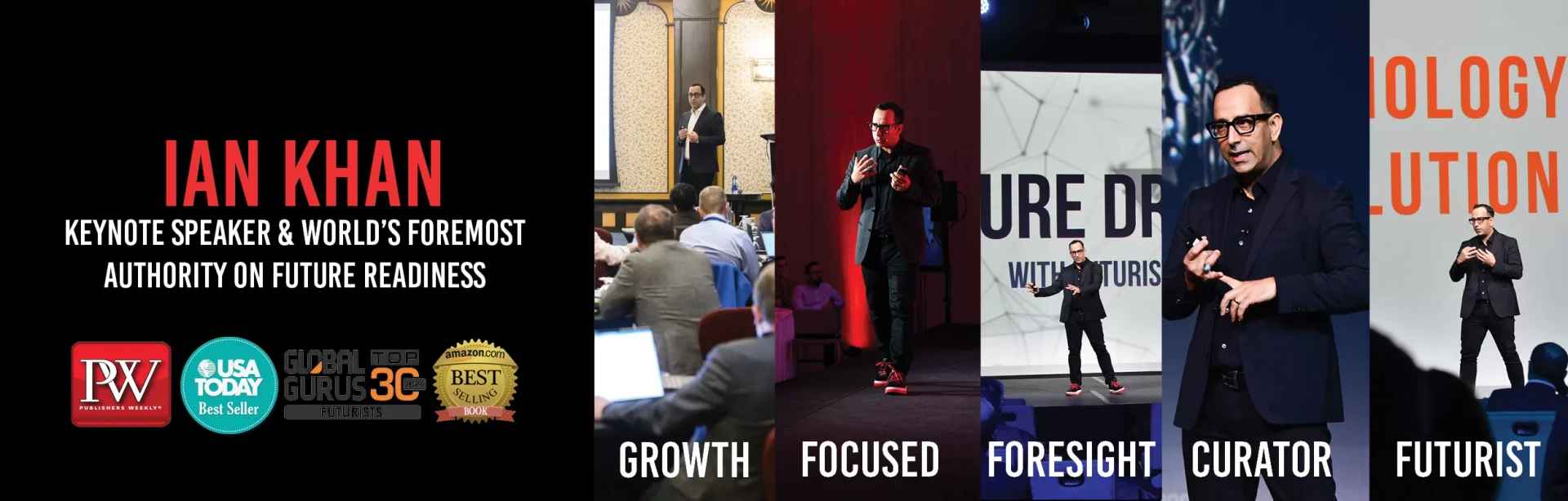
Ian Khan is a globally recognized futurist, CNN contributor, and the creator of the acclaimed Amazon Prime series “The Futurist.” His ability to demystify complex technological trends and translate them into actionable business strategy has made him a sought-after keynote speaker for leading organizations worldwide. As a Thinkers50 Radar Award recipient, he is recognized as one of the top management thinkers shaping the future of business and technology.
Ian’s expertise is perfectly suited to guide organizations through the monumental shifts coming to healthcare. His deep understanding of AI, digital transformation, and Future Readiness provides a critical framework for healthcare providers, biotech firms, and insurers to not only anticipate these changes but to lead them. His insights help leaders build resilient, adaptive organizations that can thrive in an era of exponential technological change.
Are you ready to future-proof your organization? Contact Ian Khan today for an enlightening keynote speech, a transformative Future Readiness workshop, or strategic consulting on navigating digital transformation in the healthcare sector. Equip your team with the foresight and tools to lead in the world of 2040, today.